Saranda sits on a curved bay of the Ionian Sea opposite Corfu, and its beaches fall into three stretches. In the town itself there is the shore along the promenade and a string of hotel beaches either side of it. South of the town, the coast road runs past Monastery Beach and Mirror Beach to Ksamil, where white sand faces a cluster of small islands inside Butrint National Park. North of the town, the coast turns steep and wild: coves reached mainly by boat, then the village beaches of Lukovë and the long shore at Borsh.
The underfoot changes as you go. Ksamil and the islands are sand, Monastery Beach is pebble, and Borsh is pebbles and round stones. The busiest beaches are the ones closest to the road, and the quietest are the ones you need a boat, a paddle or a coastal path to reach.
This guide works outwards from the town, south to Ksamil and the Greek border, then north up the coast, with what each beach is like and how to get there.
What to expect underfoot
The National Tourism Agency describes Mirror Beach as white sand among karst rocks, and the Ksamil shore and the small beaches on its islands are sand too. Monastery Beach is a pebble cove, and the agency calls Borsh a beach mainly of pebbles and round stones, with some parts better suited to swimming than others. Up the coast at Lukovë, the agency describes the beaches as small and quiet, surrounded by greenery.
On the organised beaches, sunbeds and umbrellas are set out through the summer and are the part you pay for; the sea and the sand themselves ask for nothing. Where the shore is rock, as it is round much of the coast north of the town, the way in is over stones, so shoes you can swim in are worth packing.
The town beaches and the promenade
The Saranda Promenade runs along the bay through the centre of town. A 1.2 kilometre rehabilitation of the waterfront cleared traffic and parking from the zone, built a central square and pier, and added stepped seating that runs down to the water, and the walkway now ties the town beach to the cafés and restaurants along the front. The National Tourism Agency lists the promenade among the most frequented places in the town.
Beyond the promenade, several hotels keep their own stretch of shore. West of the centre, Mucobega Hotels runs two buildings on a wide sandy beach kept for hotel guests, with jet ski hire and boat trips starting from the sand. On the coast road south, Buzë Hotel, about 1.6 kilometres from the centre towards Ksamil, keeps a stretch of natural shoreline for its guests, and Mango Luxury Resort runs a beach and its own club on the sand in front of the building.
The town shore is also the base for the water sports. Kedrik Water Sport rents Yamaha WaveRunners on the waterfront and runs guided jet ski trips south to Monastery Beach, Pasqyra and the Ksamil islands, and Saranda Diving takes beginners on their first dive from a protected beach, standing in shallow water before a guided dive to around 10 metres.

Ksamil and its beaches
Ksamil is a young village, built in 1966 on the coast south of Saranda, off the road to Butrint, and since the 2015 reform it has been an administrative unit of Sarandë municipality together with neighbouring Manastir. It lies inside Butrint National Park. Wikipedia credits its white sand beaches with the tourism boost the village has had, and the National Tourism Agency counts it among the busiest summer destinations on the Albanian Riviera.
Ksamil Beach is the village shore, and much of Ksamil's tourist trade has grown up along it. Small boats and canoes cross from here to the islets just offshore, and the karst rocks of Pigeon Cave lie a little further along the same coast. Expect company through the summer, the season the agency has in mind.
The shore has its beach clubs too. Orange Beach Club Ksamil stands on the central beach with sunbeds on the sand and DJ sets and themed nights through the summer, and Greg Beach Club is a beachfront restaurant and lounge bar whose kitchen runs from Albanian dishes to raw seafood plates. For hire on the sand, Ksamil Water Sport rents clear-hulled kayaks, stand-up paddleboards and pedal boats that take up to four people.
The Ksamil islands
Just off the shore lie the Islets of Ksamil, four rocky islets with a combined area of 8.9 hectares, and they can only be reached by boat. The two outer islets, the Twin Islands of Ksamil, are joined by a narrow strip of sand, and small white sand beaches fringe their shores. Holm oak, alder, elm, bay laurel and myrtle grow on them, and seagrass meadows of Posidonia oceanica spread through the water around them, where common and bottlenose dolphins are recorded.
Getting across is a matter of choosing a boat. Poda Water Sport, a family of local captains, runs a 30-minute cruise around the islands as well as longer runs to Pigeon Cave, Ali Pasha's castle and Tongo island. Ksamili Escape finishes its routes at the islands and lets guests stay as long as they like before the ride back, and Ksamil Albania Boat Rental & Tours hires self-drive boats with no licence needed, after a briefing on navigation and safety.
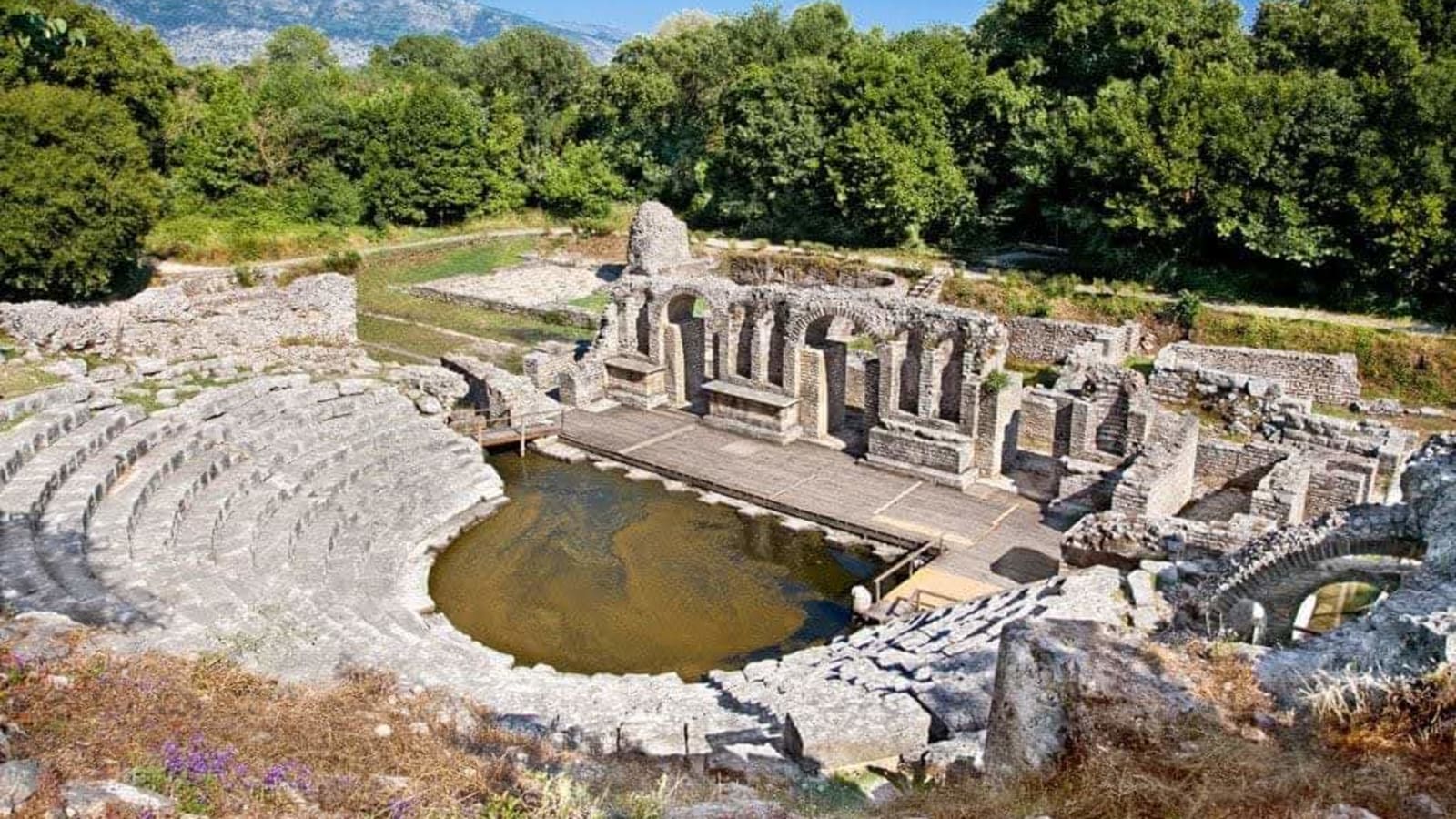
The islands are part of the national park, the same protected area that holds the ancient city of Butrint further down the road. The Butrint guide covers the park and the site.
Monastery Beach and Mirror Beach
Between Saranda and Ksamil the road runs above two coves. Monastery Beach, Plazhi i Manastirit, lies below the hill where the Monastery of Saint George stands, as the National Tourism Agency puts it. The Monastery of Saint George is a walled foundation on Demë hill, dated to the 15th century by several sources, and the cove at its foot is backed by green slopes, with sunbeds and umbrellas set out along its pebble shore in summer.
Mirror Beach lies about a kilometre further south along the same stretch of coast, and about 3 kilometres north of Ksamil village. Its Albanian name is Plazhi i Pasqyrave, and the National Tourism Agency explains it: on calm days the water reflects the sun like a mirror. The agency describes white sand, karst rocks and still water, and a beach less frequented than the main resort beaches.
Both coves are stops for the boats. The Ksamil jet ski tour run by Kedrik Water Sport stops at Monastery Beach and at Pasqyra on its way to the islands, and one of the Ksamili Escape routes heads north from Ksamil past Pasqyra and the wall of the old monastery to a swim and snorkel stop at Pigeon Cave, Shpella e Pëllumbave.

South of Ksamil: Pema e Thatë and Laguna
The coast south of the village breaks into further coves on the way to Butrint and the border. Pema e Thatë, the Dry Tree, takes its name, the National Tourism Agency says, from a dead tree that once stood in the water close to the shore and no longer survives. The beach club there rents sunbeds with nets for two to four people, gazebos and pairs of sunbeds under an umbrella, takes bookings only from guests of 16 and over, and has free parking; the sunsets are over Corfu, across the strait.
Further south, Laguna Beach Ksamil rents sets of two sunbeds with an umbrella on a golden sand shore facing Corfu, and every sunbed rental includes use of the floating inflatable water park offshore. It has a bar, a lounge and a restaurant behind the sand, and runs water sports from the shore.
Beyond these, the boats go on towards Tongo island. SeaSun Boat Tours Ksamil runs private full days past Pema e Thatë, Ali Pasha's castle, Blue Bay and the mussel farms, with a barbecue lunch on the shore at Ftelea bay and a finish at the Tongo islands on the Greek border.
Coves reached by sea: Kakome and Krorëz
North of the town, the coast is cliff and hillside, and its coves are mostly reached from the water. The National Tourism Agency describes Kakome as a small, hidden bay near the village of Nivicë-Bubar, north of Saranda, with transparent, deep water and mountains and rocks around it. Krorëz lies between the Shpella area of Lukovë and the gulf of Kakome, and the agency says it is reached mainly by boat from Saranda or by coastal and mountain paths; it describes white sand, white rocks and several freshwater springs around the beach.
The boats from Saranda port build their days around these coves. Blue Whale Boat Trips stops at Breshka Cave, the Qefali cliffs, Kakome Bay, Soldier Bay and Roidhe Beach, then spends about three hours at Krorëz; lunch is not included, and guests bring food or eat at the restaurant there. Nemo Boat runs a shared Hidden Coves day to Turtle Cave, Roidhe Bay, Soldier's Bay, Gremina, Kakome and Krorëz, and Enzo Water Sport spends two hours at Krorëz on its northern route, with umbrellas set out there for its guests.

Lukovë and its coves
Lukovë is a coastal village up the coast road, about 22 kilometres from Saranda by the National Tourism Agency's count. It belongs to Himarë municipality, not to Saranda's, and since the 2015 reform it has been an administrative unit that also takes in Piqeras, Nivicë, Shënvasil and Borsh. The hillsides are terraced with olive groves.
The agency describes Lukovë's beaches as small and quiet and surrounded by greenery, with the village roads linking the houses to the beaches and caves of the area. They suit a quieter day by the sea, and a base in the village itself puts them on the doorstep.
The coast here is also good paddling water. Kayaks Rent Sups hires single and tandem kayaks and stand-up paddleboards from Shpella beach in Lukovë, each with a life vest, a dry bag and a snorkelling set, and its four-hour guided morning paddle follows the small caves and hidden beaches south of Lukovë to Krorëz. No experience is needed, but swimmers only: the tours are not suitable for non-swimmers.
Borsh
Borsh lies further north on the same road, south of Himarë and, like Lukovë, part of Himarë municipality. The National Tourism Agency calls Borsh Beach the longest beach on the Riviera, with a coastline of about 7 kilometres, made up mainly of pebbles and round stones. It is reached from the village by a road through olive groves, and the Borsh stream reaches the sea here.
The agency presents Borsh as an alternative for visitors who want to avoid mass tourism, with a quiet atmosphere and local food. Wikipedia notes that tourism is still developing, with a handful of small hotels and guesthouses, and the village lives from tourism and olive oil.
Two campsites sit on the shore. Blue Camps faces the water with a thatched restaurant, a beach bar and sunbeds, and Jungle Camping Borsh lies at the far end of the beach between the sand and the mountain slope, with paddleboards for hire. Above the old village, Borsh Castle stands on its rock, refortified under the emperor Justinian in the 6th century.

Tours & Day Trips in Saranda
Boat trips, day tours and tickets around the town and the southern coast, via GetYourGuide.
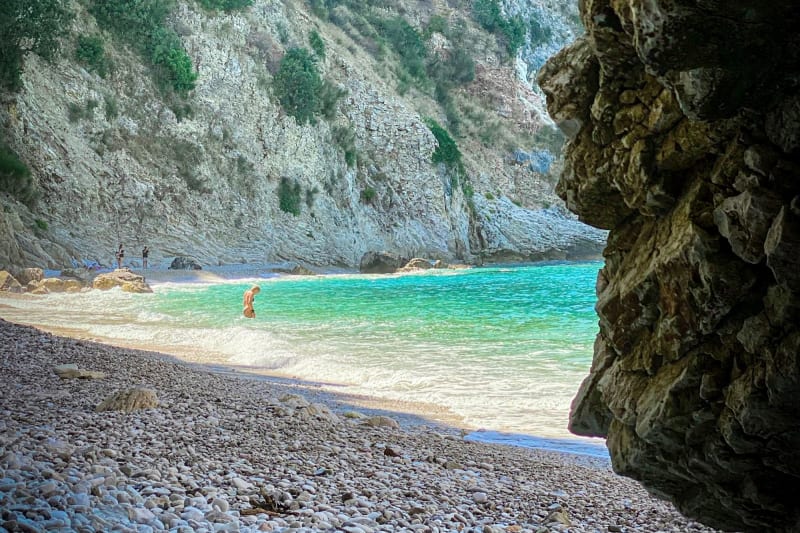
Boat Trip to Hidden Beaches and Sea Caves
Four hours by small boat from Saranda to four beaches reached only by sea and two sea caves, with snorkelling and umbrellas.
Check availability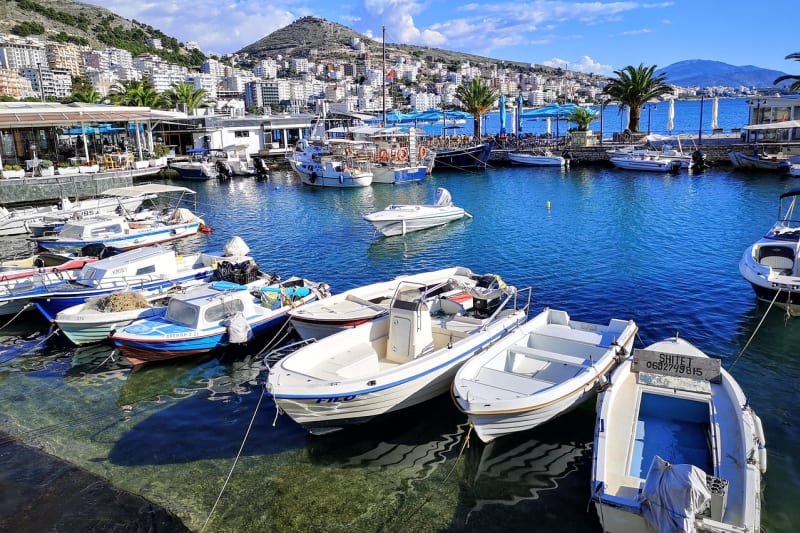
Speedboat Up the Coast to Kroreza Bay
Five and a half hours up the coast from Saranda past Gremina, Kakome and Soldiers Bay, with a long stop and a sunbed at Kroreza.
Check availability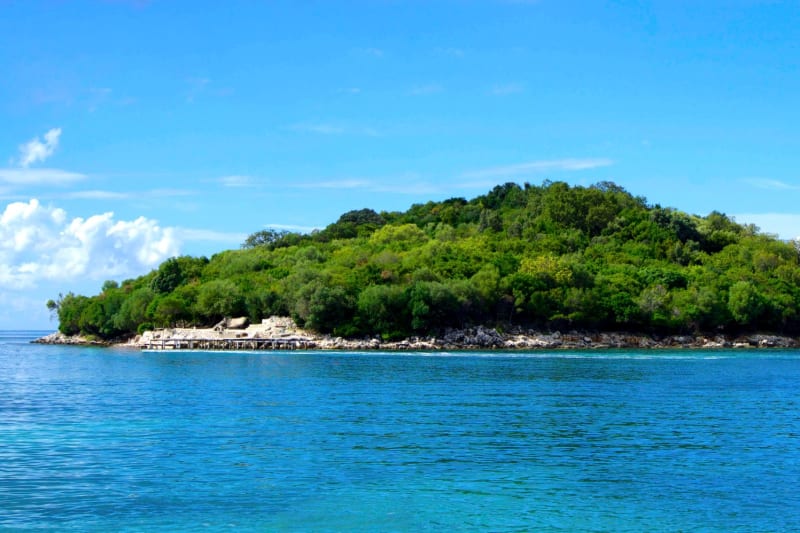
Speedboat Round the Ksamil Islands
A 20-minute speedboat loop of the five Ksamil islands, then as long as you like on the Twin Islands to swim.
Check availability
Paddleboard Hire in Saranda
A stand-up paddleboard to take along the Saranda shore at your own pace, with a two-hour option.
Check availabilityGetting to the beaches
For Ksamil, the public bus is the simplest way. The Saranda to Ksamil and Butrint bus stop in the town centre carries the Municipality of Sarandë's timetable for the line, which calls by Hotel Butrinti, Hotel Oasi, the Planet supermarket and the Çukë channel before Ksamil, and returns from Butrint. The timetable is posted at the stop itself.
With car hire, the whole coast from Pema e Thatë to Borsh is within reach in a day. Cars booked through this site for Saranda are handed over by delivery to an agreed address in town, not at a desk. The rental terms allow driving only on paved public roads and prohibit the unpaved exits to the beaches, so a beach at the end of a dirt track is one to walk the last stretch to. The getting to Saranda guide covers parking in town.
Two wheels and taxis fill the gaps. Ksamil Rentals hires 125cc motorcycles as well as cars from its base in the village, and Taxi Saranda Shehaj runs private half and full day taxi tours to Ksamil, Pasqyra beach and Butrint on a route the passenger sets. For the coves north of the town, the boats from Saranda port are the way in.
Sun, sea and what to watch for
Bring cash as well as a card. Albania uses the lek, and Ksamil Albania Boat Rental & Tours says most of its boats are paid in cash in lek or euro, while Kedrik Water Sport takes euro or lek in cash or by card. Exchange Pro and the other exchange offices in town change money.
In July and August, book the boats ahead: Ksamil Albania Boat Rental & Tours recommends reserving at least one to two days ahead in those months, and Saranda Diving advises two to three days. When the sea is too rough, the operators move trips: Blue Whale reschedules or refunds a trip called off for rough sea.
Sun cream is easy to find. Ema's Pharmacy Ksamil stocks sun protection in depth, including a water-resistant lotion for children. Around the Ksamil islands, remember that the water is part of a national park, with seagrass meadows on the seabed.
Picking a beach
For a swim without leaving town, the town beach along the promenade, or a hotel beach on the coast road south.
For sand, shallow water and the islands, Ksamil, with a boat across to the Twin Islands.
For a cove below wooded slopes a short way out of town, Monastery Beach, or Mirror Beach a kilometre further on for white sand and karst rock.
For the coves with no road, a boat north from the port to Kakome and Krorëz, or a paddle from Lukovë.
And for the longest stretch of shore and the fewest crowds, Borsh. The where to stay guide explains which of these makes the better base, and the day trips guide takes the coast road north as an outing of its own.